
Samsung Galaxy S23 Review: A Compact Phone

The Samsung Galaxy S23 is another pint-sized smartphone, but this time with a major change. Samsung has finally ditched the Exynos chipset, opting for the Snapdragon 8 Gen 2, which powers most 2023 flagships. Does this mean better battery life and that the Galaxy S23 is now the perfect compact smartphone?

Design and Build Quality

Showing Design and Build quality of S23

You’ve got little hands and stubby fingers, you might find using a 6.8-inch smartphone difficult. The Samsung S23, however, is like a breath of fresh air. Compact smartphones are limited these days, especially now that Apple isn’t making many iPhones anymore. I’ve always loved the Zenfone 9, but the Galaxy S23 feels fantastic to hold and use. While it has a one-handed mode, it’s not strictly necessary. The Galaxy S23 looks smart and comes in a small range of colors; I’m particularly fond of the green one. The design, however, is a bit bland. Unlike the Zenfone 9, it lacks originality and flair. It’s inoffensive but not exciting.

It’s good to see that Samsung cares about the environment, as the S23 is designed with recycled materials, including bottles, water barrels, and even fishing nets. Both the front and back are made from Gorilla Glass Victus 2. While the back remains pristine after a few weeks, the front display shows a few nicks, so I recommend using a screen protector. The Galaxy S23 is also IP68 water and dust-resistant, so you can use it in the shower or bath.

Display and Audio Quality
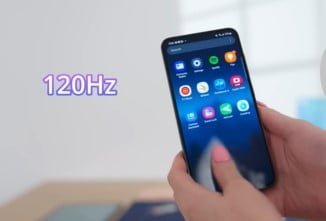
Samsung Galaxy S23 Review: 120Hz Display

If you’re worried that a 6.1-inch screen might not be big enough to enjoy the latest Hollywood blockbusters, don’t worry. The Galaxy S23 boasts stunning AMOLED tech and is fully customizable, so you can tweak the color tones or have them adjust automatically based on ambient lighting. There’s no Dolby Vision, but you have HDR 10+ support, which looks lush with deep blacks, natural hues, and sharp details in every frame. The panel reaches up to 2000 nits at maximum peak brightness, so visibility in sunlight isn’t an issue. The Galaxy S23 supports refresh rates between 48 and 120Hz, and everything runs smoothly in adaptive mode. It has a decent stereo speaker setup with Dolby Atmos and Bluetooth 5.3 support. However, Samsung did not bring back the headphone jack for the Galaxy S23 series.

There is an issue displaying Amazon products. Please contact the administrator to check that.

Performance

Samsung’s Galaxy S23 is powered by a Snapdragon 8 Gen 2 chipset backed by 8 GB of RAM. The Snapdragon 8 Gen 2 is super-powered, great for gaming, and energy-efficient, so it doesn’t heat up like the original Snapdragon 8 Gen 1. The Galaxy S23 holds a stable frame rate in Genshin Impact even at maxed-out settings, gaming for hours with only slight warmth. The only issue was occasionally missing a tap in the heat of the moment due to the compact display. This might be a concern for games with many on-screen buttons like Genshin Impact or Call of Duty. I wish Samsung would add more dedicated gaming tools and features like Sony and Asus. The priority mode is available, but that’s about it.

One more thing to note is that the 128GB version uses UFS 3.1 for storage, while the 256GB and up versions use the faster UFS 4.0. However, phone source speed has never been an issue for the reviewer, and it’s frankly difficult to even find a task that saturates the UFS 3.1 speed on a phone, so there’s no need to worry about this. Just get as much storage as you need, especially since increasing the storage won’t give you any more RAM, as they’re all just at eight gigs.

Software and Features

If you already have a Galaxy phone, you’ll be familiar with Samsung’s One UI 5.1 setup. It offers refinements and more automation opportunities. It’s the same Samsung launcher, with its usual abundance of Samsung apps that mirror Android ones and occasional junk. Sometimes, Bluetooth audio streaming stops for no reason, which is frustrating. And of course, there’s Bixby, but this isn’t the time for a Bixby rant. When you get a Galaxy S23, you can choose up to 512 GB of storage, but there’s no microSD support. If you download a lot of movies or shoot video, consider the higher storage options.

Battery Life

The real marvel of the Samsung Galaxy S23 is the battery life. While the capacity is only marginally increased to 3900 mAh, the switch to the Snapdragon platform ensures a full day of use. In previous models like the S21 and S22, the battery would often deplete by 6 pm, causing frequent warnings and anxiety.

However, with the Galaxy S23, there’s no worry of running out of juice even on very busy days. It may not be as enduring as some other Snapdragon 8 Gen 2 smartphones, but I consistently ended each day with 10-20% battery remaining, even with six hours of screen time, media streaming, and camera use. Despite the same charging technology as the previous generation, the small battery size means it doesn’t take long to recharge, and the wireless charging option adds flexibility.

Camera Test

Samsung Galaxy S23 Review: Cameras

The cameras on the back of the Galaxy S23 are still the same hardware as last year, but the new SOC brings some new processing and a new feature. The new feature allows the phone to take 8K videos at 30fps, which is a substantial upgrade from last year’s model. The 8K video is noticeably more detailed than the 4K video and has less of the over-sharpened look that is typical for phone videos. Even in indoor lighting, the 8K video is much more detailed. The file size is only twice the size for four times the amount of pixels, making it worth it. The S23’s 8K video is even better than the iPhone 14 Pro’s 4K video.

Samsung S23 8k Video Recording
Image Credit – Created by Ella

However, you can’t film in HDR at 8K 30 on the Galaxy S23, so it’s a trade-off between the brighter and more colorful HDR video versus the better-detailed 8K video. The S23’s regular 4K video is slightly less detailed compared to the iPhone 14 Pro’s 4K video, and the color in the Samsung video is a bit less realistic with some clouds that look way too blue. Stabilization is just okay on the main sensor, with some notable darkening artifacts in the video, particularly in the bottom half.

Samsung S23 Camera Photos
Image Credit – Created by Ella

As for the photos, there is a 50-megapixel high-resolution mode for the main lens. Without zooming in, the 50MP photos look a bit softer than the regular 12-megapixel photos since it has less sharpening. The 50MP mode does have its purpose, especially if you zoom in. The CN Tower and the buildings in the 50-megapixel image just look so much better, and similarly, the 50 mode preserves the texture on the rocks much better. The 50-megapixel mode on the S23 can keep up with even the high-resolution modes on the more expensive iPhone 14 Pro and S23 Ultra, at least in daytime.

Samsung S23 Camera night mode
Image Credit – Created by Ella

Unfortunately, at night, the 50-megapixel mode isn’t as good. This sign here looks less detailed than in a 12-megapixel mode, so it’s not worth using the 50-megapixel mode at night. It’s great that Samsung lets you adjust the level of sharpening, but it should be built right into the camera settings instead of requiring a separate app.

Overall, the Galaxy S23’s camera is a substantial upgrade from last year’s model, with its 8K video and 50-megapixel high-resolution mode. While it may not match the iPhone 14 Pro in some aspects, it can certainly keep up with it in other areas, making it a great choice for those looking for a high-quality camera phone.

Specs

Starting price$799 / £849 / AU$1,349
Display size and resolution6.1-inch Dynamic AMOLED, FHD+ Flat Screen, 425ppi
Display brightness, refresh rate1,750nit, 120Hz Adaptive Refresh Rate
ProcessorSnapdragon 8 Gen 2 Mobile Platform for Galaxy
RAM8GB
Storage128GB, 256GB
Rear cameras50MP main, 12MP ultrawide, 10MP telephoto (3x optical zoom, 30x Space zoom)
Video8K at 30fps, 4K at 60fps and Full HD at 120fps
Front camera12MP, 4K video at 60 fps
Battery size3,900 mAh
Battery life (Hrs:Mins)10:27
Charging speed25W
Size2.79 x 5.76 x 0.3 inches
Weight5.93 ounces
ColorsPhantom Black, Cream, Green, Lavender

Final Thought

It is such a relief that Samsung has finally come to its senses and included a Snapdragon chipset in this flagship handset for us here in Blighty. If, like me, you prefer a more compact handset, it’s definitely a worthy alternative to the likes of the Zenfone 9 and Pixel 7. I’ve rounded up my favorite compact smartphones and will update to include this one. It isn’t cheap, but overall, it is a solid experience that I did quite enjoy. A couple of little bits of jank aside, which will hopefully be fixed in a future update. Speaking of updates, you’ve got plenty of software updates to look forward to on this thing, so even though it is quite pricey, it should hopefully see you through the long haul. But anyway, that’s what I think of the Samsung Galaxy S23. What do you think? Have you been using the S23?

Leave a Comment

Samsung Galaxy S23 Review: A Compact Phone

The Samsung Galaxy S23 is another pint-sized smartphone, but this time with a major change. Samsung has finally ditched the Exynos chipset, opting for the Snapdragon 8 Gen 2, which powers most 2023 flagships. Does this mean better battery life and that the Galaxy S23 is now the perfect compact smartphone?

Design and Build Quality

Showing Design and Build quality of S23

You’ve got little hands and stubby fingers, you might find using a 6.8-inch smartphone difficult. The Samsung S23, however, is like a breath of fresh air. Compact smartphones are limited these days, especially now that Apple isn’t making many iPhones anymore. I’ve always loved the Zenfone 9, but the Galaxy S23 feels fantastic to hold and use. While it has a one-handed mode, it’s not strictly necessary. The Galaxy S23 looks smart and comes in a small range of colors; I’m particularly fond of the green one. The design, however, is a bit bland. Unlike the Zenfone 9, it lacks originality and flair. It’s inoffensive but not exciting.

It’s good to see that Samsung cares about the environment, as the S23 is designed with recycled materials, including bottles, water barrels, and even fishing nets. Both the front and back are made from Gorilla Glass Victus 2. While the back remains pristine after a few weeks, the front display shows a few nicks, so I recommend using a screen protector. The Galaxy S23 is also IP68 water and dust-resistant, so you can use it in the shower or bath.

Display and Audio Quality

Samsung Galaxy S23 Review: 120Hz Display

If you’re worried that a 6.1-inch screen might not be big enough to enjoy the latest Hollywood blockbusters, don’t worry. The Galaxy S23 boasts stunning AMOLED tech and is fully customizable, so you can tweak the color tones or have them adjust automatically based on ambient lighting. There’s no Dolby Vision, but you have HDR 10+ support, which looks lush with deep blacks, natural hues, and sharp details in every frame. The panel reaches up to 2000 nits at maximum peak brightness, so visibility in sunlight isn’t an issue. The Galaxy S23 supports refresh rates between 48 and 120Hz, and everything runs smoothly in adaptive mode. It has a decent stereo speaker setup with Dolby Atmos and Bluetooth 5.3 support. However, Samsung did not bring back the headphone jack for the Galaxy S23 series.

There is an issue displaying Amazon products. Please contact the administrator to check that.

Performance

Samsung’s Galaxy S23 is powered by a Snapdragon 8 Gen 2 chipset backed by 8 GB of RAM. The Snapdragon 8 Gen 2 is super-powered, great for gaming, and energy-efficient, so it doesn’t heat up like the original Snapdragon 8 Gen 1. The Galaxy S23 holds a stable frame rate in Genshin Impact even at maxed-out settings, gaming for hours with only slight warmth. The only issue was occasionally missing a tap in the heat of the moment due to the compact display. This might be a concern for games with many on-screen buttons like Genshin Impact or Call of Duty. I wish Samsung would add more dedicated gaming tools and features like Sony and Asus. The priority mode is available, but that’s about it.

One more thing to note is that the 128GB version uses UFS 3.1 for storage, while the 256GB and up versions use the faster UFS 4.0. However, phone source speed has never been an issue for the reviewer, and it’s frankly difficult to even find a task that saturates the UFS 3.1 speed on a phone, so there’s no need to worry about this. Just get as much storage as you need, especially since increasing the storage won’t give you any more RAM, as they’re all just at eight gigs.

Software and Features

If you already have a Galaxy phone, you’ll be familiar with Samsung’s One UI 5.1 setup. It offers refinements and more automation opportunities. It’s the same Samsung launcher, with its usual abundance of Samsung apps that mirror Android ones and occasional junk. Sometimes, Bluetooth audio streaming stops for no reason, which is frustrating. And of course, there’s Bixby, but this isn’t the time for a Bixby rant. When you get a Galaxy S23, you can choose up to 512 GB of storage, but there’s no microSD support. If you download a lot of movies or shoot video, consider the higher storage options.

Battery Life

The real marvel of the Samsung Galaxy S23 is the battery life. While the capacity is only marginally increased to 3900 mAh, the switch to the Snapdragon platform ensures a full day of use. In previous models like the S21 and S22, the battery would often deplete by 6 pm, causing frequent warnings and anxiety.

However, with the Galaxy S23, there’s no worry of running out of juice even on very busy days. It may not be as enduring as some other Snapdragon 8 Gen 2 smartphones, but I consistently ended each day with 10-20% battery remaining, even with six hours of screen time, media streaming, and camera use. Despite the same charging technology as the previous generation, the small battery size means it doesn’t take long to recharge, and the wireless charging option adds flexibility.

Camera Test

Samsung Galaxy S23 Review: Cameras

The cameras on the back of the Galaxy S23 are still the same hardware as last year, but the new SOC brings some new processing and a new feature. The new feature allows the phone to take 8K videos at 30fps, which is a substantial upgrade from last year’s model. The 8K video is noticeably more detailed than the 4K video and has less of the over-sharpened look that is typical for phone videos. Even in indoor lighting, the 8K video is much more detailed. The file size is only twice the size for four times the amount of pixels, making it worth it. The S23’s 8K video is even better than the iPhone 14 Pro’s 4K video.

Samsung S23 8k Video Recording
Image Credit – Created by Ella

However, you can’t film in HDR at 8K 30 on the Galaxy S23, so it’s a trade-off between the brighter and more colorful HDR video versus the better-detailed 8K video. The S23’s regular 4K video is slightly less detailed compared to the iPhone 14 Pro’s 4K video, and the color in the Samsung video is a bit less realistic with some clouds that look way too blue. Stabilization is just okay on the main sensor, with some notable darkening artifacts in the video, particularly in the bottom half.

Samsung S23 Camera Photos
Image Credit – Created by Ella

As for the photos, there is a 50-megapixel high-resolution mode for the main lens. Without zooming in, the 50MP photos look a bit softer than the regular 12-megapixel photos since it has less sharpening. The 50MP mode does have its purpose, especially if you zoom in. The CN Tower and the buildings in the 50-megapixel image just look so much better, and similarly, the 50 mode preserves the texture on the rocks much better. The 50-megapixel mode on the S23 can keep up with even the high-resolution modes on the more expensive iPhone 14 Pro and S23 Ultra, at least in daytime.

Samsung S23 Camera night mode
Image Credit – Created by Ella

Unfortunately, at night, the 50-megapixel mode isn’t as good. This sign here looks less detailed than in a 12-megapixel mode, so it’s not worth using the 50-megapixel mode at night. It’s great that Samsung lets you adjust the level of sharpening, but it should be built right into the camera settings instead of requiring a separate app.

Overall, the Galaxy S23’s camera is a substantial upgrade from last year’s model, with its 8K video and 50-megapixel high-resolution mode. While it may not match the iPhone 14 Pro in some aspects, it can certainly keep up with it in other areas, making it a great choice for those looking for a high-quality camera phone.

Specs

Starting price$799 / £849 / AU$1,349
Display size and resolution6.1-inch Dynamic AMOLED, FHD+ Flat Screen, 425ppi
Display brightness, refresh rate1,750nit, 120Hz Adaptive Refresh Rate
ProcessorSnapdragon 8 Gen 2 Mobile Platform for Galaxy
RAM8GB
Storage128GB, 256GB
Rear cameras50MP main, 12MP ultrawide, 10MP telephoto (3x optical zoom, 30x Space zoom)
Video8K at 30fps, 4K at 60fps and Full HD at 120fps
Front camera12MP, 4K video at 60 fps
Battery size3,900 mAh
Battery life (Hrs:Mins)10:27
Charging speed25W
Size2.79 x 5.76 x 0.3 inches
Weight5.93 ounces
ColorsPhantom Black, Cream, Green, Lavender

Final Thought

It is such a relief that Samsung has finally come to its senses and included a Snapdragon chipset in this flagship handset for us here in Blighty. If, like me, you prefer a more compact handset, it’s definitely a worthy alternative to the likes of the Zenfone 9 and Pixel 7. I’ve rounded up my favorite compact smartphones and will update to include this one. It isn’t cheap, but overall, it is a solid experience that I did quite enjoy. A couple of little bits of jank aside, which will hopefully be fixed in a future update. Speaking of updates, you’ve got plenty of software updates to look forward to on this thing, so even though it is quite pricey, it should hopefully see you through the long haul. But anyway, that’s what I think of the Samsung Galaxy S23. What do you think? Have you been using the S23?